Welcome to our apiary! We welcomed our bees on May 31st, and they will remain active until late fall when they stop foraging for the season. They will not sting unless provoked, but be mindful of not swatting or squishing any of them. We wear bee suits when opening or manipulating the hives for our protection, they are not required for any other activity in the area.
Honey bees are gentle little pollinators, working selflessly to help their colony thrive. You may notice them flying from flower to flower, entering and exiting the hive, or sitting as they take a break from duty. Feel free to observe them through the fence, though they may get curious and land on you if you smell sweet. They have no intent to hurt you, just to investigate if you may be a source of food.
The apiary is a part of the Pepinelli lab’s long term research program, which investigates how climate change and other stressors (such as agrochemicals, pesticides, and diseases) are impacting plant-pollinator networks. We use innovative airborne environmental DNA (eDNA) tools that we are developing through the Atkins Innovation Fellowship. Honey bees are generalist pollinators, meaning they collect nectar and pollen from any flowers in their search radius (around 1.5km from the hive!). They return to the colony with food, and a ton of environmental DNA from plants they visited. This can give us an incredible amount of information about what is flowering and when. For more details, refer to the Atkins Innovation Fellowship page.


The Process
Throughout the month of May, we eagerly prepared for the arrival of our bees. We purchased hive boxes (and later, our bees) from a friend of the lab, Dawn Lalonde, and began to paint the exterior in order to weather proof the previously unfinished wood.
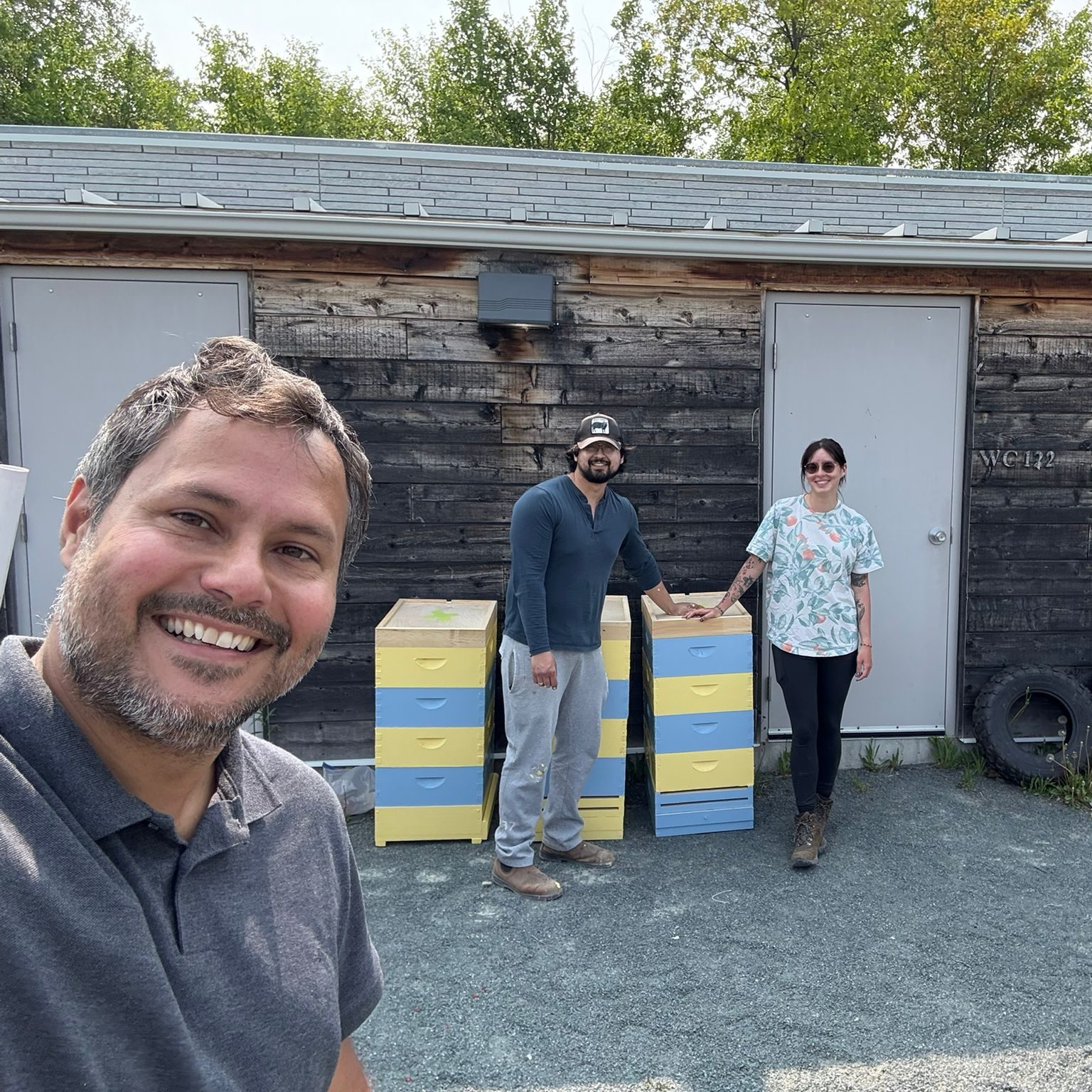

Finally we set out to pick up our Nucs. Four boxes came home with us, and we gently transferred the frames into our hives on May 31st.


June Update
They’ve made themselves at home, mapping out the surrounding areas, collecting food, and caring for brood (eggs and larvae). Pictured here is a frame from one of our colonies, inside the combs are larvae. The larvae remain in place while nurse bees feed them, until finally they become large enough to pupate. The nurse bees will then cover them with a wax cap, until the pupae emerge as full grown bees. Their numbers continue to grow, indicating healthy hives with active queens.


Once the paint was dry, we were ready to install the hives inside our very bear-proof fencing at the Living with Lakes Centre.
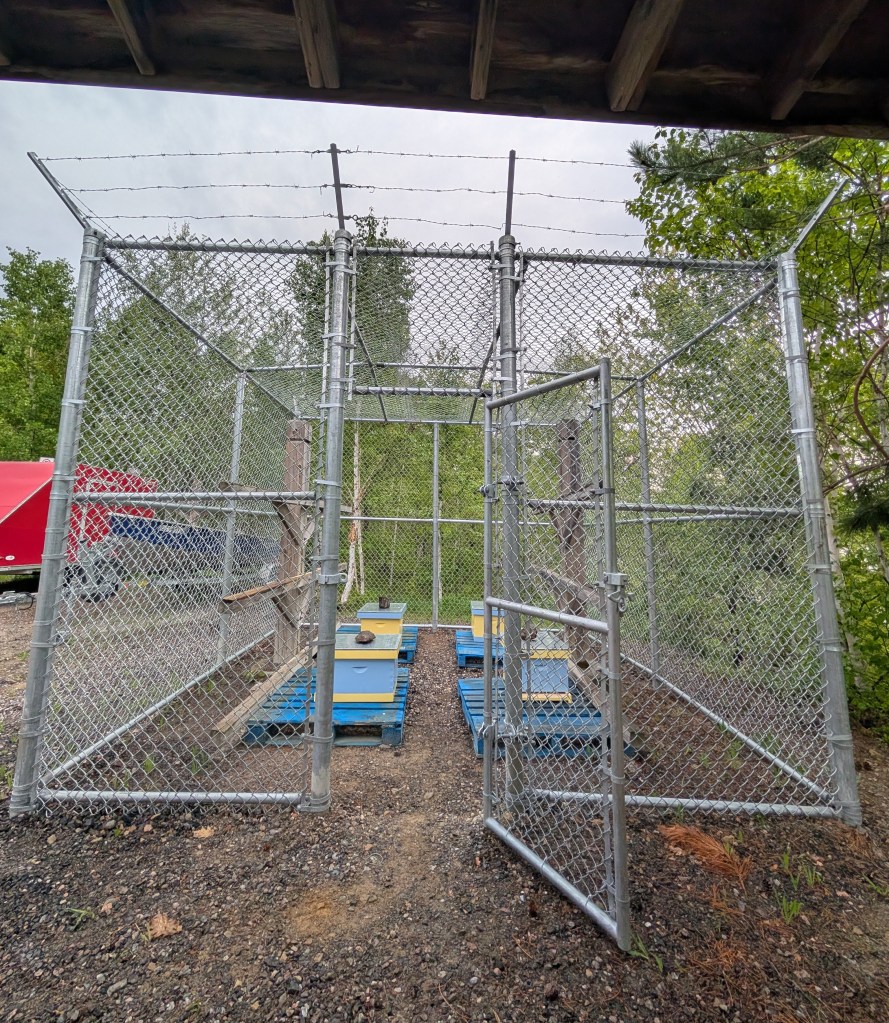

The True Beginning
The bees have been enjoying their new homes, foraging in the surrounding greenery.
We’re giving them time to fully adjust and get stronger before we begin our data collection via pollen traps, and eDNA air filters.
We hope you love our bees the way we do, and thank you for being kind to our colonies!

Each colony has one queen. Ours are dotted with green paint so we can easily spot them during our inspections.
We’re preparing to begin our data collection in the upcoming weeks. Both pollen traps and eDNA air filters are being installed in each colony. We’ll also be monitoring the temperature and humidity inside the hives, to compare with the readings outside.
Lots of experiments and learning are ahead of us and the bees, check in to see new updates as we progress into the season!
 Pepinelli Lab